Relocating a commercial business facility is a monumental undertaking that tests the limits of any organization’s operational resilience. Unlike a residential move, where the primary concerns are packing boxes and forwarding mail, a business relocation involves a complex web of logistical, structural, and human elements. The sheer volume of moving parts can be overwhelming, and the stakes are extraordinarily high.
The hidden enemy of any facility move is operational downtime. Every day—or even every hour—that your business is offline translates directly into lost revenue, stalled production, and potentially alienated clients. When relocations are poorly planned, companies often find themselves paying rent on two spaces simultaneously, dealing with catastrophic IT failures, or discovering major structural issues in the new building only after the lease is signed and the equipment is delivered. The financial bleeding in these scenarios can be severe enough to negate the strategic benefits of moving in the first place.
A successful commercial relocation requires a strategic master plan that addresses everything from interior workflow optimizations to exterior security, well before the actual move-in date. It is a process that must be approached not merely as a change of address, but as an opportunity to audit your operational efficiency, upgrade your infrastructure, and reposition your brand.
This comprehensive guide serves as your master checklist. We will break down the essential phases of a business relocation, exploring logistical planning, structural evaluations, interior customization, perimeter security, and final aesthetic updates. By following this roadmap, you can mitigate the chaos, protect your bottom line, and ensure that your new facility accelerates your business growth from day one.
Planning the Logistics and Securing Infrastructure
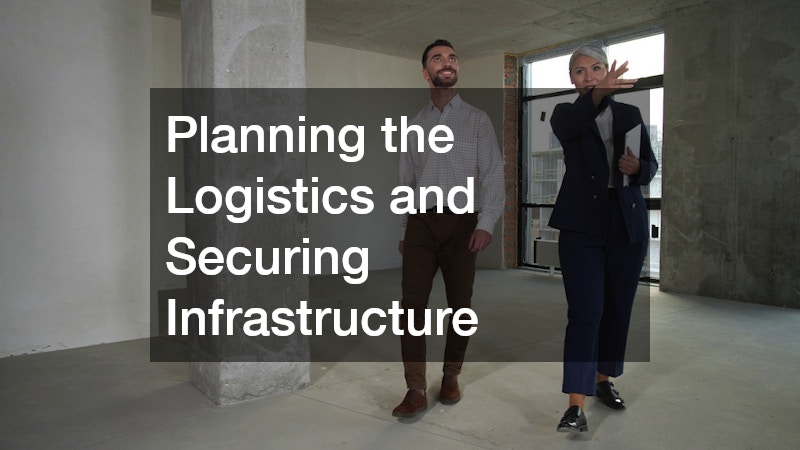
The foundation of a successful move is established months before anyone touches a packing tape dispenser. Moving a business requires synchronizing the departure from your current space with the readiness of your new location, ensuring that critical infrastructure like IT networks and electrical grids are fully operational before the heavy equipment arrives.
Draft a Master Timeline Six Months in Advance
Procrastination is the costliest mistake you can make during a relocation. To prevent a chaotic scramble, you must draft a reverse-engineered timeline, starting from your target opening day and working backward at least six months. This master schedule will serve as the single source of truth for your management team.
A robust master timeline should account for several critical milestones:
-
Lease Overlap Management: Negotiate a 30-to-60-day overlap between your old lease and your new one. This buffer period is critical for managing delays in construction or unexpected logistical hiccups without facing severe holdover penalties from your current landlord.
-
IT and Communications Migration: Your servers, internet lines, and phone systems must be functional before the staff arrives. Schedule fiber optic installations and network mapping at least 90 days out, as utility providers are notoriously slow.
-
Inventory and Asset Auditing: A move is the perfect time to liquidate obsolete equipment and dead inventory. Audit your assets to determine what is moving, what is being sold, and what is being recycled.
-
Vendor and Supply Chain Notifications: Map out a communication schedule to inform suppliers, logistics partners, and local delivery routes of your impending address change to avoid supply chain disruptions.
Because the physical transportation of a business involves delicate technology, massive machinery, and highly sensitive documentation, securing the right logistics partners early is paramount. It is crucial to evaluate and secure contracts with highly rated commercial moving companies well in advance. Specialists who have the specialized equipment and trained personnel to safely transport server racks, manufacturing equipment, and sensitive executive files often have schedules that fill up months ahead of time.
Audit the New Location’s Power Capacity Early
One of the most frequent and expensive surprises business owners face when relocating is discovering that their new facility lacks the necessary electrical infrastructure. Just because a building has power does not mean it has the right kind or amount of power for your specific operations.
Before you finalize your lease or purchase agreement, a deep dive into the building’s power capacity is mandatory.
-
Calculate Maximum Amperage: Work with your department heads to aggregate the power draw of all current equipment, plus any new machinery you plan to purchase within the next five years.
-
Verify Phase Requirements: Many industrial machines and advanced HVAC systems require three-phase power. If the new building is only wired for single-phase power, the upgrade will be incredibly expensive and time-consuming.
-
Inspect Panel Conditions: Determine the age and condition of the existing electrical panels. Overloaded panels or outdated switchgear pose severe fire risks and will likely fail municipal inspections.
-
Plan for Dedicated Circuits: Ensure there is capacity to run dedicated circuits for server rooms, breakroom appliances, and high-draw manufacturing equipment to prevent nuisance tripping.
Do not rely on the landlord’s verbal assurances regarding electrical capacity. It is imperative to hire independent, licensed commercial electricians to conduct a thorough audit of the main breaker panels, transformers, and wiring. They can provide a realistic estimate of whether costly electrical drop upgrades or full panel replacements are required, allowing you to negotiate these capital expenditures into the lease agreement before you commit.
Evaluating the Building Envelope Before Signing

The building envelope—the physical barrier between the interior conditioned space and the exterior elements—is your first line of defense against property damage. When relocating, it is easy to become enamored with a building’s interior layout or geographic location while ignoring the state of its exterior shell. Inheriting a compromised envelope means inheriting significant financial liability.
Demand a Comprehensive Weatherproofing Inspection
Water infiltration is the fastest way to ruin inventory, destroy vital IT infrastructure, and create severe mold liabilities. Before taking possession of a new facility, you must verify the structural integrity of the building’s exterior, with a particular focus on the roof, exterior sealants, and drainage systems.
A thorough weatherproofing inspection should leave no stone unturned:
-
Roof Drainage Systems: Evaluate gutters, interior drains, and scuppers. If these are blocked or improperly pitched, standing water will rapidly degrade the roofing materials.
-
Window and Door Sealants: Check the caulking and weatherstripping around all exterior penetrations. Degraded sealants lead to energy loss and slow, hidden water leaks that rot interior framing.
-
Masonry and Siding Condition: Look for spalling bricks, deep cracks in the stucco, or rust on metal siding panels, all of which indicate moisture penetration.
-
HVAC Penetrations: Examine how rooftop climate control units are sealed against the roof deck. Improper flashing around these units is a primary source of commercial leaks.
To protect your business from sudden, catastrophic water damage, it is highly advisable to contract objective commercial roofing services to conduct a rigorous evaluation. An independent inspection of the current state of the membrane, shingles, parapet walls, and core insulation will reveal the true remaining lifespan of the roof. This ensures you are not blindly stepping into a lease that requires you to shoulder the burden of massive water damage liabilities or immediate, out-of-pocket replacements.
Budget for Necessary Structural Improvements Prior to Move-In
If your weatherproofing audit or general inspections reveal significant vulnerabilities, you must address them before your inventory and personnel cross the threshold. Conducting major structural or overhead repairs in an occupied building is a logistical nightmare.
Consider the operational advantages of executing these improvements while the building is still vacant:
-
Zero Disruption to Productivity: Construction noise, dust, and utility shutoffs will severely hamper your team’s ability to work. Doing this beforehand keeps your operations smooth.
-
Protecting Your Assets: You cannot risk having raw materials, expensive electronics, or sensitive inventory exposed to the elements or construction debris during a major repair.
-
Faster Completion Times: Contractors can work much faster—and often cheaper—when they do not have to tiptoe around office furniture, navigate employee foot traffic, or adhere strictly to after-hours noise ordinances.
If the roof inspection reveals the need for extensive patchwork, flashing replacement, or a complete tear-off, schedule this immediately. Bringing in dedicated commercial roofers while the facility is empty allows them to utilize heavy machinery, stage materials safely on the ground, and complete the project in a fraction of the time. You can often negotiate with the landlord to split these costs or secure a period of free rent to offset the capital you are injecting into their asset.
Customizing the Interior for Maximum Productivity
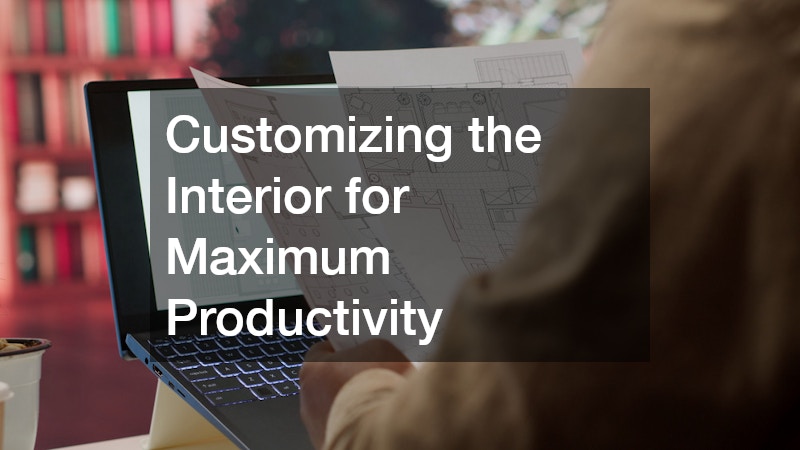
Once the structural integrity and electrical infrastructure are secured, your focus must shift to the interior environment. The layout and physical finishes of your workspace directly impact employee morale, collaboration, and overall productivity. A relocation provides a rare blank canvas to design a space that truly serves your operational needs.
Redesign the Floor Plan to Match Workflow
A common mistake businesses make is attempting to force their unique workflow into the existing layout of a new building. If the current floor plan features isolated, dark offices but your team relies on rapid, open collaboration, productivity will suffer. Conversely, if you operate a firm handling sensitive legal or financial data, an open-concept warehouse conversion will lead to disastrous privacy breaches.
Take the time to evaluate how your team actually operates and redesign the floor plan accordingly:
-
Analyze Departmental Adjacencies: Which teams need to interact constantly? Place your sales and marketing teams near each other, while keeping the accounting or human resources departments in quieter, secure zones.
-
Optimize Natural Light: Democratize natural light by placing communal areas and open workstations near windows, reserving the darker interior core of the building for storage, server rooms, and restrooms.
-
Design for Future Scaling: Do not build just for your current headcount. Design the floor plan with flexible zones that can easily accommodate additional desks or machinery as your company grows over the next three to five years.
-
Prioritize Acoustic Privacy: Incorporate sound-dampening materials, solid-core doors, and floor-to-ceiling partitions for conference rooms and executive suites to prevent noise pollution.
To execute this vision safely and legally, you should partner with experienced commercial contractors early in the process. They will manage the complexities of interior demolition, secure the mandatory municipal building permits, and ensure that new framing, drywall, and fire-suppression adjustments are built exactly to your architectural specifications and local fire codes.
Upgrade High-Traffic Flooring for Longevity
Flooring is often an afterthought during a relocation, but it represents one of the most heavily abused components of any commercial facility. Inheriting old, stained carpeting or chipped vinyl composite tile (VCT) not only looks unprofessional to visiting clients but also creates ongoing maintenance headaches for your facility team.
Before moving in, audit the flooring in high-traffic zones such as lobbies, warehouse aisles, breakrooms, and main corridors.
-
Evaluate Total Cost of Ownership: Standard VCT requires a relentless, expensive cycle of chemical stripping, waxing, and buffing to maintain its appearance. Carpets in heavy-use areas require constant deep cleaning and rapid replacement.
-
Consider Load-Bearing Needs: If your business utilizes forklifts, pallet jacks, or heavy rolling carts, you need flooring that can withstand immense point-load pressure without cracking or tearing.
-
Focus on Safety and Hygiene: Seamless flooring eliminates cracks and grout lines where dirt and bacteria accumulate, creating a much safer and cleaner environment for your staff.
For an optimal blend of extreme durability and modern aesthetics, many facility managers are turning to advanced concrete treatments. Utilizing professional concrete staining services can completely transform a dull, gray slab into a vibrant, polished, and highly resilient surface. This approach not only provides a sleek, custom look that aligns with your brand colors but also creates a surface that is incredibly easy to clean, highly resistant to heavy machinery traffic, and completely eliminates the need for future waxing or carpet replacements.
Enhancing Perimeter Security and Parking
While interior layouts and aesthetics are vital for day-to-day operations, the exterior elements of your new facility dictate the safety of your employees and the first impression of your visitors. An effective relocation checklist must place heavy emphasis on perimeter security and vehicular traffic management.
Establish Secure Access Control Zones
A new building means a new set of security vulnerabilities. You cannot rely on the previous tenant’s security protocols, nor should you assume that a standard lock-and-key system is sufficient to protect your business assets. Establishing robust access control starts at the property line, long before anyone reaches the front door.
A comprehensive perimeter security plan should include:
-
Delineating Public vs. Private Areas: Clearly separate visitor parking from employee parking and high-security zones like loading docks or fleet vehicle storage yards.
-
Automated Gate Systems: Implement keycard, fob, or biometric entry systems at all perimeter vehicle gates. This allows you to track exactly who enters the property and instantly revoke access for terminated employees or vendors.
-
Adequate Security Lighting: Criminals thrive in the dark. Ensure that all fence lines, walkways, and rear entrances are bathed in bright, motion-activated LED lighting to deter trespassing and nighttime vandalism.
-
Visual Deterrents: High-quality fencing is both a physical barrier and a psychological deterrent. It signals that the property is actively monitored and fortified.
To properly secure your operational perimeter, consult with specialized commercial fence builders who understand industrial security requirements. They can design and install heavy-duty, anti-climb barriers, automated rolling gates, and secure pedestrian turnstiles that integrate seamlessly with your building’s overarching digital access control software, ensuring your fleet and inventory remain entirely locked down.
Repair and Restripe the Employee and Visitor Lots
The parking lot is the literal welcome mat for your business. An asphalt surface riddled with potholes, faded lines, and poor drainage not only looks terrible but presents a massive liability. Slip-and-fall accidents or vehicle damage occurring on your property can lead to devastating lawsuits and increased insurance premiums.
Before you host your grand opening or welcome employees to the new site, the parking infrastructure must be flawless:
-
Address Structural Pavement Issues: Do not just fill potholes with cheap cold patch. Have professionals cut out failing asphalt sections and repair the sub-base to prevent sinkholes from returning.
-
Ensure ADA Compliance: The Americans with Disabilities Act (ADA) has incredibly strict guidelines regarding the number, size, and slope of accessible parking spaces. Failing to meet these standards can result in hefty fines and lawsuits.
-
Optimize Traffic Flow: Use the relocation as a chance to rethink how vehicles move through the property. Implement clear directional arrows, designated delivery loading zones, and safe pedestrian crosswalks.
-
Enhance Drainage: Ensure that water flows toward catch basins rather than pooling in the center of the lot, which accelerates asphalt deterioration and creates winter ice hazards.
Coordinating with local commercial paving companies to mill, resurface, and apply fresh, highly visible striping to your lots is an investment in both safety and brand perception. A pristine, clearly marked parking lot demonstrates a high level of professionalism and care, setting a positive tone for employees arriving for their shift and clients arriving for high-stakes meetings.
Finalizing the Exterior Aesthetics and Brand Updates

The final phase of a commercial relocation involves tying up the loose ends of your public-facing image. Once the infrastructure is sound and the security is tight, you must ensure that the facility visually represents the quality of your business and that your customers actually know where to find you.
Implement Low-Maintenance Landscaping Solutions
Landscaping often becomes an unexpected financial drain for commercial properties. Sprawling lawns require constant irrigation, weekly mowing, fertilizer treatments, and seasonal cleanups. Furthermore, in regions prone to drought, watering large commercial lawns can lead to massive utility bills and municipal penalties.
Smart facility managers look for ways to enhance curb appeal without inflating the ongoing operating budget. Consider these modern landscaping strategies:
-
Xeriscaping: Utilize native, drought-resistant plants, river rocks, and mulch to create beautiful, textured garden beds that require almost zero supplemental watering.
-
Hardscaping Elements: Install concrete seating walls, paver walkways, and outdoor employee break areas that add functional value to the property without requiring landscape maintenance.
-
Automated Drip Irrigation: For the live plants you do keep, replace wasteful sprinkler heads with targeted drip lines that deliver water directly to the root zones, drastically cutting water consumption.
For businesses that want the lush, inviting look of a manicured green lawn near their front entrances or signage without the relentless upkeep, exploring artificial grass installation is a highly strategic move. Modern synthetic turf looks incredibly realistic, remains vibrant green year-round regardless of the weather, completely eliminates landscaping water bills, and frees your maintenance budget from expensive weekly mowing contracts.
Update All Physical and Digital Brand Collateral
A beautiful new facility is useless if your clients, vendors, and digital algorithms still think you operate out of your old building. Brand consistency during a move is critical to maintaining consumer trust and ensuring that your cash flow is not interrupted by lost invoices or misdirected deliveries.
Updating your address is a massive, multi-departmental task that should begin weeks before moving day:
-
Digital Presence Audit: Update your address, operating hours, and phone numbers on Google My Business, Yelp, Bing Places, and industry-specific directories. Ensure the footer of your website and the contact pages are modified simultaneously.
-
Internal and External Communications: Draft formal relocation announcements for your clients and vendors. Update the automated signatures in all employee email accounts to reflect the new headquarters.
-
Government and Financial Updates: Notify the IRS, state tax boards, municipal licensing departments, your bank, and your insurance providers of your change of address to avoid lapsed coverage or missed tax notifications.
-
Physical Signage Updates: Ensure that monument signs, door decals, and interior lobby logos are manufactured and ready to be installed the day you take possession of the building.
To guarantee a seamless transition in the physical world, it is highly recommended to partner with reliable commercial printing services well in advance of the relocation. By bulk-ordering updated business cards, branded envelopes, shipping labels, and promotional grand-opening banners a month prior to the move, you ensure your sales and administrative teams have the exact tools they need to operate professionally on day one at the new facility.
Conclusion
Relocating a commercial business is a high-stakes endeavor that requires far more than just boxing up inventory and signing a new lease. It is a complex, multi-phased project that touches every aspect of your organization, from human resources and IT to facility management and public relations. By stepping away from the chaos of reactive moving and embracing a meticulously detailed, proactive master plan, you can protect your company from the crippling costs of operational downtime and structural surprises.
The key to navigating this transition smoothly lies in preparation and the willingness to audit every facet of your new facility. Ensuring your electrical infrastructure can handle your growth, fortifying the building envelope against the elements, designing an interior that fosters productivity, and locking down your exterior perimeter are all tasks that must be accomplished before the moving trucks ever arrive.
Ultimately, the smartest move a business leader can make during a relocation is recognizing when to delegate. Surrounding yourself with a network of vetted, specialized professionals allows you to focus on what you do best: running and growing your business. By utilizing this comprehensive checklist and leveraging the expertise of industry specialists, you can transform the daunting challenge of a facility relocation into a powerful catalyst for your company’s next era of success.