When attendees reminisce about a spectacular outdoor event, they usually talk about the phenomenal headline performance, the perfect weather, the delicious food truck options, or the vibrant energy of the crowd. They rarely talk about the bathrooms—unless, of course, something went terribly wrong. Poor sanitation management is arguably the fastest, most surefire way to ruin a guest’s experience at an otherwise flawlessly executed gathering. A single overflowing facility or a twenty-minute wait in line can instantly shift a guest’s mood from joyous to miserable, casting a dark shadow over the entire event.
Large-scale outdoor events, such as multi-day music festivals, sprawling marathons, state fairs, and massive corporate retreats, require a completely different level of logistical planning compared to smaller community gatherings. You are essentially building a temporary mini-city from the ground up, complete with its own waste management infrastructure. If that infrastructure fails, public health and safety are immediately compromised. Lines bleed into pedestrian walkways, foul odors waft into dining areas, and attendees leave early, demanding refunds and taking their complaints to social media.
This comprehensive guide will walk you through the entire journey of managing sanitation for large outdoor events. We will start by running the crucial initial capacity math, explore the nuances of selecting the right equipment to match your crowd’s expectations, and dive deep into strategic placement. Furthermore, we will cover the mid-event maintenance required to keep facilities pristine and the post-event tear-down protocols that ensure you leave the venue exactly as you found it. By mastering these invisible yet critical logistics, you protect your event’s reputation, ensure compliance with local health regulations, and create an environment where your guests can simply focus on having a wonderful time.
Calculating Your Event’s Capacity and Needs
The foundation of any successful waste management plan relies heavily on accurate mathematical forecasting. You cannot simply guess how many facilities you need; you must calculate it based on hard data, historical attendance, and physiological variables.
Run the Numbers Based on Headcount and Duration
The absolute first step is establishing your baseline requirement. The standard industry baseline for events dictates generally one facility per 50 to 100 attendees for a standard four-hour event. However, this is just a starting point. As your event stretches longer into the day, the frequency of use per attendee increases exponentially.
Consider a 10,000-person music festival lasting eight hours. A crowd of that size will overwhelm a baseline setup within the first three hours. To scale this math up for all-day or multi-day festivals, you must factor in peak usage times, such as the intermission between opening acts and headliners. Estimating an accurate portable toilet rental contract relies entirely on having solid RSVP data or historical ticket sales to work from. If you are a first-time organizer, always plan for a sold-out capacity to be safe.
Here is a general breakdown of how duration affects your numbers:
-
1-3 Hours: Attendees typically use the facilities once.
-
4-6 Hours: Attendees will likely use the facilities two to three times.
-
8+ Hours: Attendees will use the facilities four to five times, requiring a massive increase in physical units to prevent excessive lines.
Factor in Food, Alcohol, and Weather Variables
Once you have your baseline, you must apply the event’s specific variables. The most significant variable is the “beer factor.” If your event includes a beer garden or serves alcohol throughout the venue, attendees will process liquids at a much faster rate. Events serving alcohol require a minimum of 15% to 20% more facilities to accommodate this increased biological demand.
Weather is the next critical multiplier. If you are hosting a summer festival where temperatures soar above ninety degrees, attendees will consume significantly more water to stay hydrated. This inevitably leads to higher restroom usage. Underestimating these variables when booking porta potty rentals leads to overflowing tanks, hours-long lines, and unsanitary conditions before the sun even sets.
Mandate ADA-Compliant Accessibility Ratios
Accessibility is not just a legal requirement; it is a fundamental aspect of hosting an inclusive, welcoming event. Standard guidelines typically mandate at least one wheelchair-accessible unit per cluster of standard units, or roughly 5% of your total inventory.
When planning for these units:
-
Ensure they are placed on flat, hard-packed ground or pavement.
-
Verify that the transition from the pathway to the unit is smooth and free of lips or sudden drop-offs.
-
Place them at the ends of banks rather than in the middle to allow for an easier turning radius for wheelchairs and mobility scooters.
-
Remember that families with small children or strollers often rely on these larger units, so factor that into your capacity calculations.
Choosing the Right Facilities for Your Crowd
Not all sanitation facilities are created equal, and not every area of your event requires the same level of luxury. The key to a balanced budget and a satisfied crowd is matching the specific type of unit to the demographic and the specific zone of the event footprint.
Match the Unit Type to Your Event’s Vibe and Budget
For massive general admission areas, your primary goal is volume and efficiency. You need to process a large number of people quickly. Here, the tiers of available facilities become important. The standard, non-flushable single unit is the workhorse of the event industry. It is durable, easy to place, and cost-effective.
When planning your budget, conducting a cost-benefit analysis of utilizing basic porta john rentals for the bulk of the crowd is essential. These units keep your overhead low while satisfying the fundamental requirements of your general admission ticket holders. However, even within standard units, you can opt for slight upgrades, such as units equipped with built-in hand sanitizer dispensers or hover handles, which improve the user experience without breaking the bank.
Upgrade VIP and Backstage Areas with Climate Control
While standard units suffice for general admission, VIP ticket holders, high-level corporate sponsors, and performing artists expect a premium experience. If someone has paid three times the standard ticket price for a VIP pass, asking them to use a standard plastic unit in the sweltering heat is a surefire way to guarantee they will not return next year.
This is where you must elevate your offerings. The features of luxury restroom trailers completely transform the guest experience. These trailers essentially mimic a high-end indoor bathroom. They come equipped with flushing porcelain toilets, running water in stainless steel sinks, vanity mirrors, premium soap dispensers, and, most importantly, climate control. Air conditioning in the summer and heating in the fall provide a sanctuary for VIPs. Furthermore, backstage areas require these premium setups to cater to the comfort and privacy of talent and their production crews.
Provide Essential Handwashing and Sanitization Stations
Providing a place for attendees to relieve themselves is only half the battle; providing the means for them to clean their hands is equally crucial. Supplying toilets without adequate hand hygiene leads to severe public health risks, accelerating the spread of germs in an environment where people are often eating with their hands from food trucks.
-
The Ideal Ratio: Plan for at least one multi-user handwashing station per four standard toilets.
-
Station Types: Foot-pump operated stations with fresh water reservoirs are ideal as they prevent cross-contamination from dirty hands touching faucet handles.
-
Sanitizer Backups: Even if you have water stations, mount heavy-duty foam sanitizer dispensers inside or directly outside every single unit as a failsafe when water levels run low.
Strategic Placement and Site Planning
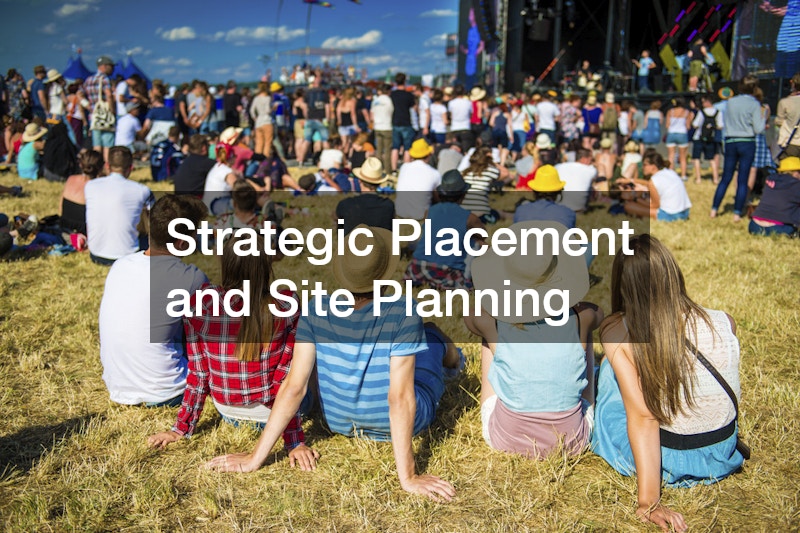
You can rent the perfect number of high-quality units, but if you place them poorly, your event will still suffer from logistical nightmares. Site planning requires thinking like a city planner, taking into account traffic flow, topography, and the psychological behavior of large crowds.
Map Out High-Traffic Zones and Downwind Locations
The psychology of crowd flow is fascinating. People naturally gravitate toward edges, exits, and areas of high consumption. Placing units near food courts, main stage transition zones, and primary exits is highly effective because it intercepts attendees right when they realize they need to use a facility. However, they should never be placed too close to dining areas.
You must act as an amateur meteorologist. Check the historical wind patterns for your specific venue during the month of your event. You must ensure that the prevailing winds blow odors away from your main stages, VIP tents, and food vendors. Placing a bank of toilets upwind of a crowded dining tent will ruin the culinary experience. Furthermore, you must work closely with your porta potty rental services provider to identify the flattest, most stable ground available. A unit placed on an incline is incredibly dangerous and prone to tipping.
Ensure Clear Access Routes for Delivery and Service Vehicles
Event planners often forget that sanitation units do not magically appear; they are delivered by massive flatbed trucks, and they are serviced by heavy pump trucks. If you place a bank of toilets in the middle of a dense forest or behind a massive stage with only a pedestrian walkway leading to it, the service trucks will not be able to reach them.
-
Weight Restrictions: Ensure the ground can support the weight of a fully loaded service truck without sinking into the mud.
-
Clearances: Check for low-hanging branches or power lines that might obstruct delivery vehicles.
-
Utility Connections: Take note of the specific power (such as generator or shore power) and fresh water hookup requirements needed to successfully operate restroom trailer rentals. These luxury units require dedicated 20-amp or 30-amp circuits and standard garden hose connections to function correctly.
Distribute Units Evenly Rather Than Creating One Massive Hub
It is highly tempting to create one gigantic “mega-bathroom” area. It seems easier to manage, easier to light, and easier to service. However, this is a massive mistake. A mega-hub forces thousands of people to converge on a single point, creating massive bottlenecks, cross-traffic collisions, and overwhelming lines that block pathways.
Instead, create smaller, strategically placed banks or “pods” of units distributed evenly throughout the festival footprint. If you have a 20-acre site, place a pod of twenty units in the north, south, east, and west quadrants. This diffuses the crowd, reduces walking times for attendees, and prevents any single bank of toilets from bearing the brunt of the entire event’s waste processing.
Maintaining Hygiene and Servicing During the Event
A pristine bathroom at 10:00 AM can easily turn into a biohazard by 2:00 PM if it is not actively managed. The true test of your sanitation plan is not how the units look when the gates open, but how they function during the peak chaos of the event.
Schedule Mid-Event Servicing for Multi-Day Festivals
If you are running a two-day or three-day event, your units will not survive without being emptied and refreshed. Capacity isn’t just about the physical number of units on the field; it is heavily dictated by the frequency of cleanings.
The logistics of pumping out and sanitizing portable toilet rentals during off-hours or early mornings for multi-day events requires military-like precision. You cannot have massive pump trucks navigating through crowds of festival-goers. Therefore, servicing must happen between 2:00 AM and 6:00 AM when the grounds are clear. The service crew will arrive, pump the holding tanks, scrub the interiors, recharge the blue deodorizing liquid, and restock the paper products so that the units are entirely refreshed for the next day’s crowd.
Appoint Dedicated Bathroom Attendants for Continuous Restocking
Relying on occasional check-ins by busy event volunteers is a recipe for empty toilet paper dispensers. For large events, you absolutely must hire dedicated staff whose sole responsibility is to monitor the sanitation zones.
These attendants perform several vital functions:
-
Continuous Restocking: They ensure toilet paper, paper towels, and hand soap never run out.
-
Surface Cleaning: They wipe down high-touch areas, sinks, and door handles throughout the day.
-
Vandalism Deterrence: Simply having an attendant present drastically reduces graffiti, intentional damage, and rowdy behavior in the facility areas.
-
Line Management: During peak rushes, an attendant can direct guests to open stalls, keeping the queue moving efficiently.
Set Up a Rapid-Response Protocol for Clogs and Spills
No matter how well you plan, emergencies will happen. Someone will drop a cell phone or a piece of clothing into a tank, clogging the suction mechanism, or a unit might sustain damage from an unruly crowd.
You must establish a clear, dedicated communication channel between your roaming event staff, your security personnel, and your maintenance crews. If a unit overflows or a sink pipe bursts, your team needs to isolate that unit immediately with caution tape to prevent further use. Furthermore, it is highly advisable to keep emergency septic services on standby on-site to handle immediate biohazard cleanups or sudden blockages. Having a truck parked in the back lot of the venue ensures that a major disaster can be remediated in minutes rather than hours, preventing a localized issue from becoming a venue-wide health hazard.
Post-Event Waste Management and Cleanup
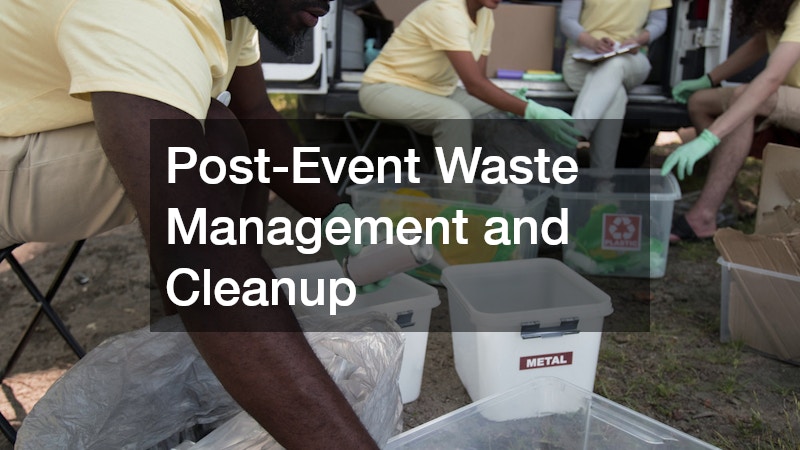
The music has stopped, the vendors are packing up, and the attendees have gone home. However, for the event planner and the sanitation team, the job is far from over. Post-event tear-down is a critical phase heavily regulated by local environmental and health codes.
Coordinate Swift Removal Timelines Immediately After Load-Out
As soon as the event footprint is clear of pedestrian traffic and staging equipment, your waste removal timeline begins. Leaving units sitting on the property for days after an event concludes will result in complaints from neighbors, lingering foul odors, and potential fines from the municipality.
You must coordinate with your vendor to establish a strict schedule for when units will be locked, pumped, and hauled away. It is important to note that full units are incredibly heavy and sloshing with hazardous material. The large-scale septic tank pumping that must occur before the physical plastic units can be safely transported on highways is a non-negotiable safety step. A truck cannot legally or safely transport fifty plastic units down a freeway if their holding tanks are full of waste.
Secure Final Environmental Compliance and Waste Manifests
When you host an event, you take on legal and environmental liability for the waste generated by your attendees. You cannot simply wash your hands of the situation once the trucks drive away. It is your responsibility to ensure that the waste is disposed of legally at a designated municipal wastewater treatment plant, not illegally dumped in a field or local waterway.
To protect yourself and your organization from massive environmental fines, demand transparency from your vendor. Explain the importance of receiving documentation, often called a waste manifest, that legally proves the volume of waste collected from your site was treated at an approved, regulated facility. This paperwork is your shield if local environmental agencies ever audit your event’s operational footprint.
Inspect the Grounds for Damage and Spill Remediation
The final step in your sanitation management plan is ensuring you leave the venue exactly as you found it, if not better. This is especially crucial if you are renting public park space or private farmland.
-
Ground Compression: Heavy pump trucks and banks of units can compact the soil or damage turf. Assess these areas to see if aeration or reseeding is required.
-
Spill Checks: Walk the exact footprint where the units stood. Look for any residual blue liquid or waste spills that may have occurred during the pumping process.
-
Vendor Accountability: This highlights the immense value of partnering with a highly reputable local septic company that guarantees a strict “leave no trace” policy. The best vendors will utilize specialized mats under their trucks to prevent rutting and will chemically treat and wash away any minor drips that occurred during the transfer process.
The Ultimate Payoff of Proactive Management
Managing the logistics of human waste is undoubtedly the least glamorous aspect of event planning. It involves complex math, unappealing discussions about biohazards, and a significant portion of your operational budget. However, successful sanitation requires exactly this kind of proactive, mathematical planning, strategic site placement, and relentless, continuous maintenance.
While your guests will likely never send you a thank-you note explicitly praising the cleanliness of the bathrooms or the optimal placement of the handwashing stations, they will absolutely remember—and loudly vocalize to their networks—a bad sanitation experience. Flawless execution in this arena operates silently; it simply allows the joy of your event to take center stage without interruption. Protecting your guests’ comfort ultimately protects your event’s brand reputation, your relationships with local municipalities, and your ticket sales for the following year.
Do not wait until the last minute to think about this crucial infrastructure. Begin your vendor outreach, start running your capacity calculations, and finalize your site mapping at least six months prior to your event date. By securing the best equipment and terms early, you lay an invisible, unbreakable foundation for a truly spectacular and memorable event.