

You budget carefully for a big physical asset purchase, whether it is a new building, a fleet upgrade, or a major property improvement, and then watch the final invoice climb far past what you planned. This happens far more often than most people expect, and it is rarely due to one single mistake. Instead, it is usually a combination of overlooked details, hidden site conditions, and assumptions made too early in the process. Understanding where these overruns come from can help you plan smarter, ask better questions, and protect your budget before the first dollar is spent.
Hidden Site Conditions Drive Up Roofing Costs
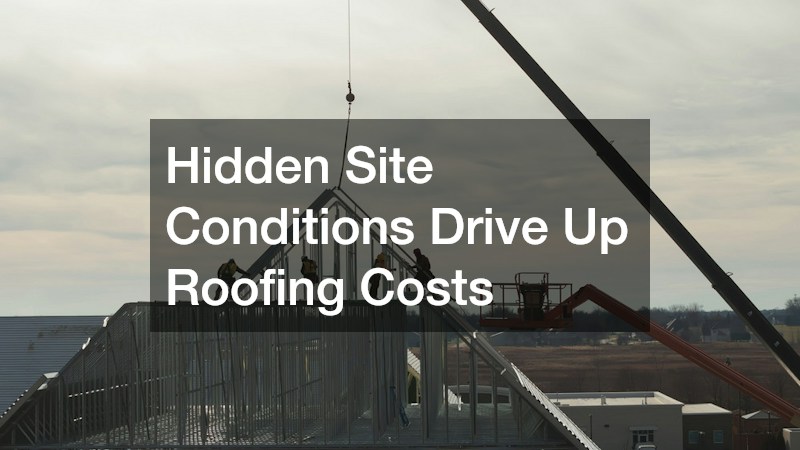
When business owners plan a roof replacement, they often budget based on a quick estimate that assumes the structure underneath is in good shape. Once roofers pull off the old shingles or membrane, they frequently find rotted decking, inadequate ventilation, or water damage that was invisible from the outside. These discoveries are not optional fixes; they are structural necessities that must be addressed before new roofing material goes down. This is one of the most common reasons a roofing project’s final cost bears little resemblance to the original quote.
The lesson here applies to almost every physical asset investment: what you cannot see before work begins can dramatically change the scope and price once it starts. Getting a thorough pre-project inspection, rather than a surface-level walkthrough, helps surface these issues earlier so they can be built into the budget from day one.
Structural Surprises Complicate Building Additions
Adding onto an existing structure or a commercial expansion, often uncovers problems that were never part of the original plan. Old wiring, outdated plumbing, or foundations that do not meet current code can all add unplanned costs. Contractors sometimes discover that the flooring system needs reinforcement before new construction can safely proceed, which is where materials like composite metal decking come into play as a stronger, more code-compliant alternative to older systems. Because this decking combines steel with concrete for added durability, it is often specified mid-project once an inspector flags a load-bearing concern that was not visible during initial planning.
These kinds of substitutions and upgrades are rarely cheap, and they are almost never anticipated in the first round of bids. Anyone planning a building addition should set aside a contingency fund specifically for structural surprises, since they are more common than not once construction actually begins.
Equipment Breakdown Reveals Deeper Problems
Businesses often invest in replacement equipment only after an existing system fails unexpectedly, putting them in a reactive position from the start. A business that schedules furnace repair in the middle of winter, for example, may face rush fees, emergency service rates, and the cost of temporary heating solutions on top of the repair itself. What begins as a straightforward repair can become a much larger expense if the technician determines that the furnace or heating system is approaching the end of its service life and requires replacement rather than continued repairs.
This pattern shows up across nearly every type of mechanical or industrial asset. Waiting until equipment breaks down completely can cost more than proactive maintenance or early replacement because emergency situations limit a business’s ability to compare quotes, evaluate replacement options, or schedule work around its operations.
Proactive maintenance and early assessment give businesses more control over equipment-related expenses. Identifying aging systems before they fail allows organizations to plan replacement costs, research suitable alternatives, and schedule installation with less disruption to normal operations.
Root Cause Investigation Prevents Repeat Expenses

One overlooked reason that asset investments blow past budget is that the underlying problem was never properly diagnosed in the first place. Businesses that skip a proper failure analysis often end up replacing the same part or system multiple times because they only treated the symptom, not the cause. A thorough investigation identifies whether a breakdown was caused by poor design, incorrect installation, material fatigue, or misuse, and that distinction changes what the actual fix should be.
Skipping this step might feel like a way to save money upfront, but it frequently leads to repeat failures and repeat invoices. Companies that invest in a proper diagnostic process before authorizing repairs tend to spend less over the life of the asset, even though the initial investigation adds a line item to the budget.
- Ask whether the failure was caused by design, installation, or material issues
- Request documentation of the diagnostic process, not just a repair estimate
- Compare the cost of investigation against the cost of repeated repairs
- Use findings to update maintenance schedules going forward
Wear and Tear Assumptions Undermine Heavy Equipment Budgets
Heavy equipment owners often underestimate how quickly certain components wear out under real working conditions. In agriculture and construction, carbon grader blades are a good example of a part that seems like a minor line item until replacement frequency is factored into the total cost of ownership. Soil conditions, rock content, and usage hours all affect how fast these blades degrade, and many buyers do not account for this when they first calculate equipment costs.
The broader issue is that initial equipment budgets tend to focus on the purchase price rather than the ongoing cost of consumable parts. Anyone investing in heavy machinery should ask for realistic wear-part replacement schedules upfront, rather than discovering the true operating cost after the first season of use.
Site Cleanup and Waste Removal Add Unplanned Costs
Construction and renovation projects generate far more debris than most people anticipate, and waste removal is often treated as an afterthought in the original budget. A kitchen remodel, for instance, can easily produce several tons of material once cabinets, flooring, drywall, and old appliances are factored in, and project managers price that out in advance. Ordering a roll off dumpster after the project has already started, rather than planning for the right size from the beginning, frequently means paying for a second haul-away or upgrading to a larger container mid-project. A 10-yard dumpster might handle a small bathroom gut job, but a whole-floor renovation often needs a 20 or 30-yard unit, and guessing wrong means either overpaying for unused capacity or scrambling to arrange a costly second pickup. Debris volume tends to surprise first-time renovators, especially when demolition uncovers old materials that also need to be hauled away, such as asbestos tile, lead paint-coated trim, or waterlogged subfloor. These discoveries can also trigger special disposal fees or require a licensed hauler, since certain materials can’t simply go into a standard dumpster with the rest of the construction waste. On top of that, weight limits and overage charges are easy to overlook: many rental agreements cap tonnage, and exceeding it — common with concrete, roofing shingles, or tile — can add hundreds of dollars in surprise fees on top of the base rental cost.
Waste disposal costs are also affected by weight limits, material type, and local disposal fees, all of which vary by region. A dumpster rated for general construction debris can quickly exceed its weight allowance when loaded with concrete, brick, or roofing material, triggering overage charges that often run several hundred dollars per load. Contaminated materials like asbestos insulation, treated wood, or lead paint require specialized handling and disposal permits, which add both time and cost that rarely show up in early estimates. Local tipping fees at landfills or transfer stations can also differ dramatically between municipalities, sometimes by 30% or more, which means a budget based on national averages can miss the mark entirely. Projects near urban centers may also face trucking surcharges or limited disposal site access, further inflating costs. Building a realistic waste removal line item into the budget from the start, based on the actual scope of demolition, helps avoid one of the more common surprise charges in any renovation project. This means getting an accurate estimate of debris volume and material type before work begins, rather than relying on rough guesses, and confirming current local disposal rates instead of using outdated figures from past projects.
Marketing and Display Assets Carry Overlooked Expenses

Physical asset investments are not limited to buildings and machinery; they also include the marketing infrastructure businesses use to represent themselves. A company that hires a custom trade show booth company often budgets for the initial design and build but forgets to account for storage, shipping, setup labor, and periodic refurbishing. These recurring costs can add up to more than the original booth investment over just a few years of use.
Businesses that treat trade show displays as a one-time purchase rather than an ongoing asset tend to be caught off guard by these expenses. Planning for transportation, seasonal updates, and wear from repeated assembly and disassembly gives a much more accurate picture of the true long-term cost.
Specialty Structures Require Realistic Lifecycle Planning
Businesses and property owners increasingly turn to fabric buildings for storage, agricultural use, or temporary workspace because they cost less upfront than traditional construction. However, buyers sometimes underestimate the cost of site preparation, foundation work, and climate-specific reinforcements needed to make these structures durable in their local environment. A fabric structure installed without proper anchoring or drainage planning can require costly repairs within just a few years.
Lifecycle planning matters just as much for these structures as it does for permanent buildings. Factoring in reinforcement needs, insulation upgrades, and periodic membrane replacement from the outset prevents the kind of budget surprises that make a seemingly affordable structure end up costing much more over time.
Water Infrastructure Investments Require Long Term Testing
Access to clean water is a critical physical asset investment for many rural properties, remote job sites, and disaster preparedness plans. Portable water purification systems are often purchased based on advertised output capacity — gallons per hour or per day — without fully accounting for the cost of filter replacement, maintenance testing, and power requirements over time. A unit rated to produce 500 gallons a day under ideal lab conditions may deliver far less once sediment load, water temperature, and real-world usage patterns are factored in. Filter cartridges alone can range from $50 to several hundred dollars depending on the filtration technology, and high-turbidity source water shortens their usable life considerably. Reverse osmosis systems add further costs in the form of pre-filters, membrane replacements, and periodic sanitization, all of which are easy to underestimate at purchase time. Power draw is another overlooked line item — systems designed for grid power may need a generator or solar backup at remote sites, adding thousands to the true installed cost. Water quality also isn’t static. Long-term testing is necessary because contaminant levels, mineral content, and biological activity can shift seasonally or after events like flooding, meaning a system sized and configured correctly at installation may underperform months later without ongoing monitoring and adjustment. Buyers who skip this planning step frequently find that ongoing operating costs — testing fees, replacement parts, and unplanned system upgrades — exceed what they expected when they made the initial purchase.
Long-term water quality testing is another expense that gets overlooked in the initial budget, yet it becomes a recurring line item for the life of the asset. Depending on the system, that can mean quarterly lab analysis for contaminants, monthly in-house checks on pH and turbidity, or continuous sensor monitoring that requires its own calibration and upkeep. Each of these carries its own cost, and none of them are one-time expenses. Regular testing ensures the system continues to perform as advertised and helps catch component wear before it leads to a larger failure. A membrane in a filtration system, for example, can degrade gradually and let contaminant levels creep upward long before any visible symptom appears. Catching that early through testing might mean replacing a $500 component instead of an entire treatment unit costing tens of thousands of dollars. This testing regime ultimately protects the original investment, but only if it’s funded consistently rather than treated as optional overhead. Skipping a testing cycle to save money in a lean quarter often costs far more later, whether through emergency repairs, regulatory fines, or the reputational damage of a compliance failure.
Accessibility Upgrades Often Expand Beyond Initial Scope
Projects intended to improve safety or accessibility frequently grow larger than originally planned once work is underway. A straightforward handrail installation, for example, can reveal that the surrounding structure, stairs, or landing does not meet current code requirements, which then requires additional work beyond the original scope. Building inspectors may flag stair riser heights, tread depths, or landing dimensions that were never part of the original conversation, and each of those findings adds its own line item to the budget. Accessibility work is especially prone to this kind of scope creep because ADA and local building codes treat many features as interconnected systems rather than standalone fixes. Widening a doorway to accommodate a wheelchair might trigger requirements for adjusted door hardware, revised threshold heights, or a larger turning radius in the adjoining hallway. A ramp addition can similarly require handrails, edge protection, and a landing at the top and bottom, none of which may have appeared in the initial estimate. Older buildings compound the problem further, since bringing one element up to code often exposes how much the surrounding structure has drifted from current standards over decades of piecemeal repairs. What started as a simple safety upgrade can turn into a broader renovation project once inspectors get involved, sometimes doubling or tripling the original cost estimate before the work is finished.
This kind of scope creep is common with any accessibility or safety-focused improvement, since building codes are often stricter than the condition of older structures. A single ADA-mandated ramp or doorway widening can trigger a cascade of related requirements: updated signage, compliant door hardware, wider hallways, or even relocated electrical panels that happen to sit in the new path of travel. Local inspectors often apply a “path of travel” rule, meaning that touching one area of a building can obligate you to bring the entire route leading to it up to current code. Older structures are especially vulnerable to this because they were often built under codes that have since been revised multiple times. A 1970s office building might need updated stairwell widths, new handrail heights, or bathroom reconfigurations that were never part of the original renovation plan. What starts as a $15,000 accessibility fix can easily balloon past $50,000 once these adjacent requirements surface. Budgeting some flexibility into these projects from the start makes it easier to absorb the cost of code-related additions without derailing the entire plan. A common approach is to add a 20-30% contingency specifically earmarked for code compliance, separate from the general project contingency. It’s also worth having a licensed contractor or code consultant walk the space before finalizing a budget, since they can flag likely trigger points that a standard cost estimate would miss.
Physical asset investments rarely stay within their original budget because so many of the biggest cost drivers are hidden until work actually begins. The best protection against this is not a bigger budget alone, but a more thorough planning process that accounts for inspections, wear parts, waste removal, and long-term maintenance from the very start. Before committing to any major purchase or project, ask detailed questions about what could go wrong and what it would cost to fix. Taking that extra step upfront puts you in a far stronger position to make a confident, informed decision.